

Why Short VR Learning Experiences Are Changing Education in 2026
Short, focused virtual reality activities are helping schools, universities and training providers make difficult subjects more practical, interactive and easier to understand.
Why Short VR Learning Experiences Are Changing Education in 2026
Virtual reality has become a more familiar part of the education conversation, but the way it is being used is changing. Early VR learning projects often focused on showing what the technology could do. Learners could visit a virtual world, explore a detailed environment or take part in a long interactive experience. These projects were impressive, but they were not always easy to fit into a normal lesson, training session or timetable.
In 2026, education providers are placing more attention on shorter, focused VR experiences. Instead of expecting learners to spend half an hour inside a headset, a teacher or facilitator can use a five-minute simulation to explain one difficult concept, introduce a practical task or prepare learners for a real-world activity. The headset becomes part of the lesson rather than the entire lesson.
This approach is helping VR become more useful for schools, colleges, universities and workplace training providers. A short immersive activity can give learners a stronger understanding of a subject without creating unnecessary technical pressure. It can support a teacher’s explanation, give learners a chance to practise and create a shared experience that the class can discuss afterwards.
The important shift is that virtual reality is no longer only being judged by how realistic or visually impressive it looks. It is increasingly being judged by whether it helps people learn something clearly, safely and effectively.
Why Shorter VR Sessions Work Better for Learning
A long virtual reality session can be useful in certain situations, especially for specialist simulations, technical training or detailed virtual tours. However, longer sessions are not always the best fit for everyday education. Learners may need time to get comfortable with the headset, teachers need to manage equipment and some students may find extended VR use tiring or distracting.
Short sessions make the technology easier to use in a real classroom or training environment. A teacher can introduce a topic, allow learners to experience a focused VR activity and then guide a discussion while the ideas are still fresh. This creates a clear learning sequence: explain, experience, reflect and apply.
For example, a science class may use a short VR simulation to explore the structure of a cell before returning to a worksheet or group discussion. A geography class may take a virtual visit to a coastal environment before discussing erosion, weather patterns or conservation. A technical learner may practise identifying safety hazards before moving into a workshop.
The VR activity does not need to carry the entire lesson. Its role is to make a difficult idea more visible, practical or memorable.
A Clear Learning Goal Makes the Difference
The strongest VR learning experiences start with a specific goal. A school should not use virtual reality simply because a headset is available. The activity should answer a practical question: what will learners understand better after this experience?
A history lesson may use VR to help learners understand the scale and layout of an important place. A biology lesson may use it to show how a process happens inside the human body. A workplace training programme may use it to help new employees practise a safety procedure before they enter a real environment.
When the goal is clear, the experience can remain focused. Learners are less likely to become distracted by unnecessary features, and teachers can connect the activity directly to the lesson plan. This also makes assessment easier because educators can ask learners to explain what they saw, describe the choices they made or apply the lesson to a related task.
More Time for Discussion and Reflection
Learning does not end when a learner removes a VR headset. In many cases, the discussion afterwards is where the experience becomes most valuable. Learners can compare what they noticed, ask questions and connect the virtual scenario to the concepts they are studying.
A teacher can use this moment to correct misunderstandings, introduce more detail or ask learners to explain how they would respond in a similar real-world situation. This helps prevent VR from becoming a passive activity where students simply look around without thinking critically.
Shorter sessions leave more time for this reflection. They also make it easier for a class to share devices, allowing groups of learners to take turns while others complete related activities, observe a screen display or prepare questions for the discussion.
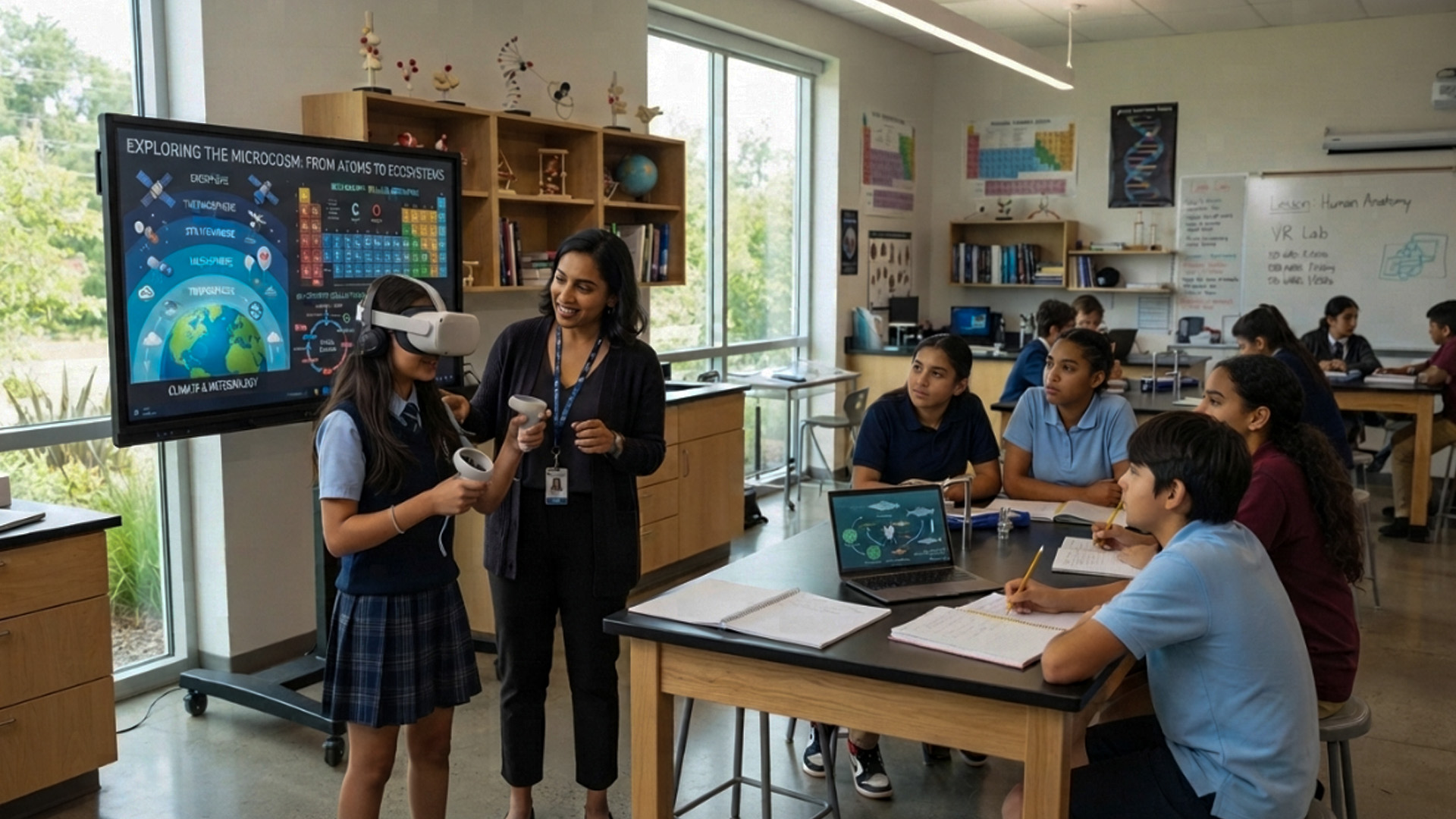
Using VR to Make Difficult Subjects More Visible
Many education subjects involve processes, spaces or systems that are difficult to understand from a textbook page alone. Learners may need to imagine how a machine works internally, how a building is structured, how a medical procedure is performed or how a historical environment looked at a particular time.
Virtual reality can make these subjects easier to explore because it gives learners a three-dimensional point of view. They can look around an environment, inspect an object from different angles and see how separate parts connect. This can be especially useful for visual and practical learners who benefit from seeing ideas in context.
The technology does not replace diagrams, books or teacher explanations. It gives educators another way to present information. A learner who struggles to understand a flat image may find it easier to understand a concept after seeing it as an interactive model.
Science and Biology Simulations
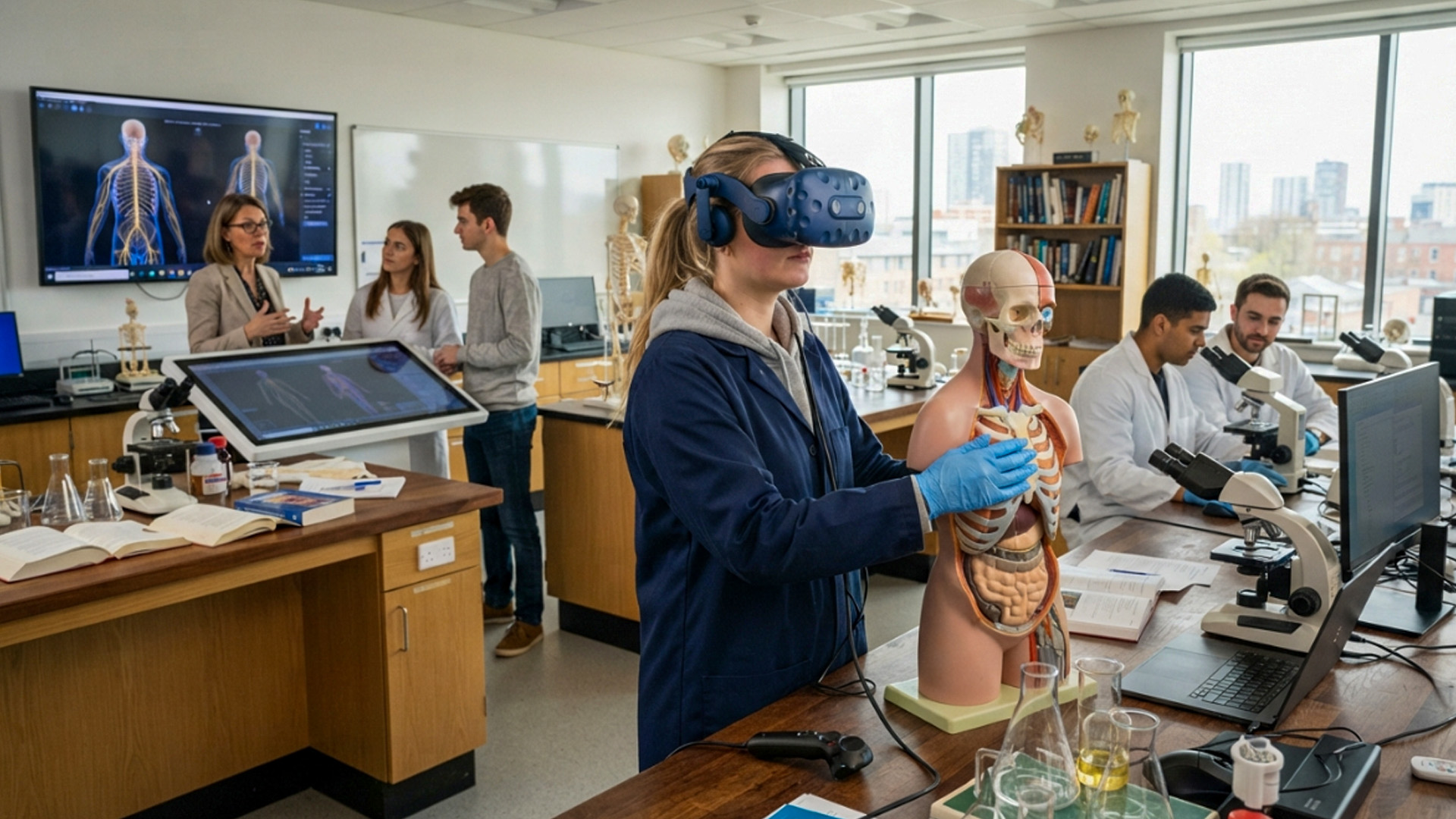
Science is one of the areas where VR can be particularly useful. Some processes are too small, too large, too dangerous or too expensive to observe directly in a normal classroom. A virtual simulation can allow learners to explore a molecular structure, enter a virtual laboratory or observe a process that would otherwise only be described through text and images.
In biology, learners can explore human anatomy, examine organs and understand how body systems work together. In chemistry, they can observe reactions in a controlled environment. In physics, they can see how forces, movement and energy affect objects in a way that is easier to visualise.
The experience should always be connected to the curriculum. A VR simulation is most useful when it supports a topic learners are already studying and gives them a clearer way to understand the key principle.
Geography, History and Virtual Field Trips
VR can also help learners explore places that would be difficult to visit in person. A class may not be able to travel to a remote ecosystem, historical site, museum or industrial facility, but a virtual experience can provide a useful introduction to that environment.
A geography lesson can take learners into a rainforest, coastal area, city or mountain landscape. A history lesson can use a reconstructed environment to help students understand the layout, scale and atmosphere of a particular period. These experiences can make a subject feel more immediate because learners are not only reading about a place; they are seeing how it fits together.
Virtual field trips should still be followed by questions, research and discussion. The purpose is not to replace real travel wherever possible. It is to expand the range of places and scenarios learners can explore within the limits of a normal school day.
VR for Skills Training and Workplace Readiness
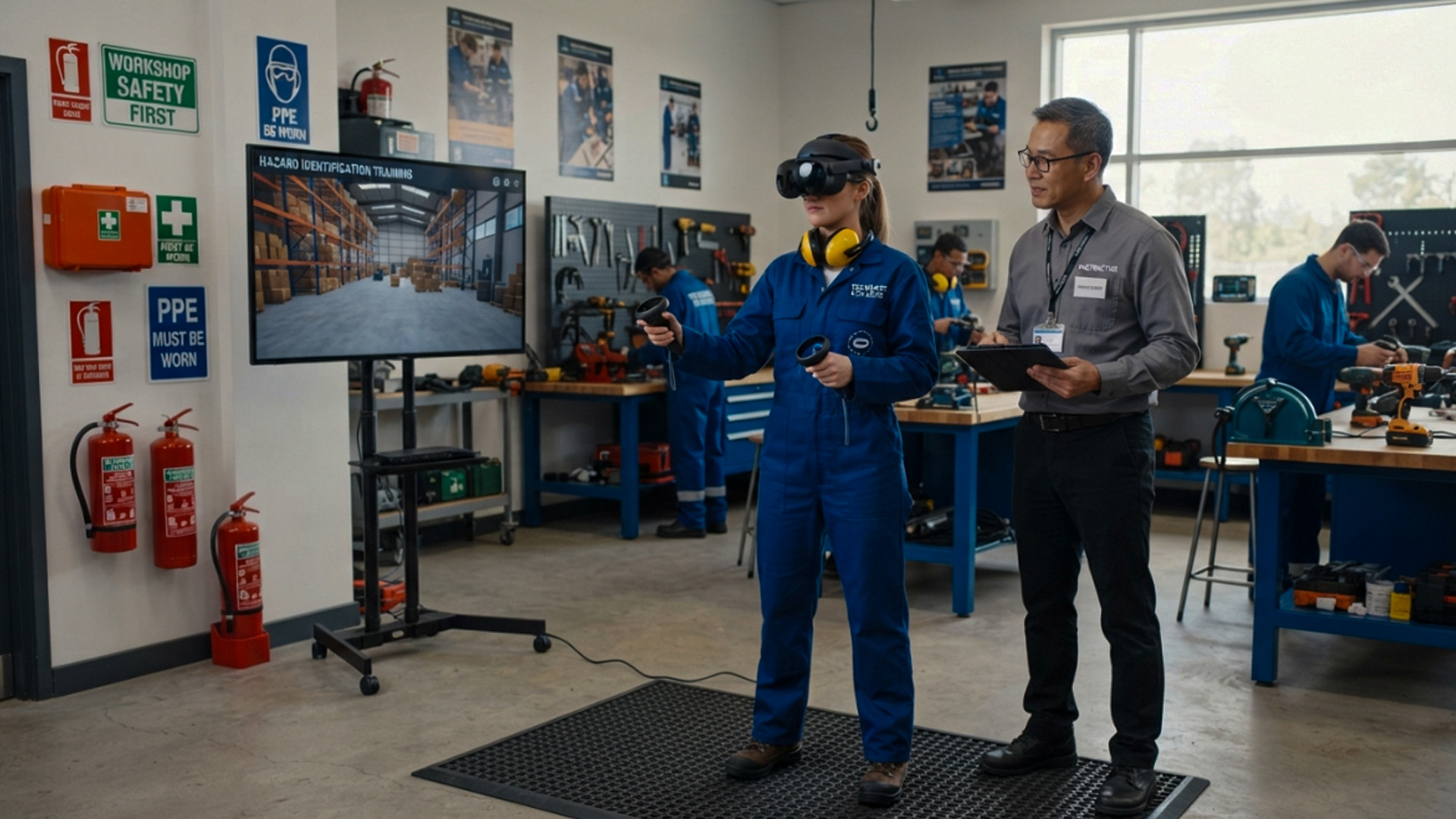
Virtual reality is also becoming more important in vocational education and workplace training. Many jobs require people to understand procedures, equipment and safety requirements before they begin practical work. In some industries, learning through trial and error can be expensive or unsafe.
VR gives learners a controlled environment where they can practise a task, make decisions and repeat the process without the same consequences that may exist in a real workplace. A learner can become familiar with the steps involved before working with actual tools, machinery or customers.
This is useful for industries such as construction, engineering, healthcare, logistics, hospitality, manufacturing and retail. The exact content will differ, but the principle remains the same: learners can build confidence through practice before moving into a live setting.
Preparing Learners for High-Risk Environments
Some workplaces include hazards that are difficult to explain fully through a presentation. A learner may understand a safety rule in theory, but it can be more meaningful when they see how that rule applies inside a realistic scenario.
A VR simulation can place a trainee inside a workshop, warehouse, construction site or healthcare environment. They can identify hazards, choose the correct protective equipment and follow the right steps in response to a situation. If they make a mistake, the system can show the outcome and allow them to try again.
This does not mean that VR replaces practical safety training. It helps learners arrive at practical training with a better understanding of what they need to do and why it matters.
Practising Communication and Customer Service
Not all useful VR training involves machinery or physical safety. Virtual reality can also support communication, teamwork and customer interaction. Learners can practise responding to a virtual customer, colleague or member of the public in a realistic setting.
This can be valuable in hospitality, retail, healthcare and corporate training. A learner can work through a difficult conversation, practise listening skills and learn how to respond calmly under pressure. The facilitator can then review the experience and discuss different approaches.
These activities work best when they are designed around realistic situations rather than generic scripts. Learners should feel that the scenario relates to the kind of people, questions and challenges they may encounter in their actual work.
Making VR Lessons Comfortable and Inclusive
For VR to work well in education, learners need to feel comfortable using it. Not every student will have the same level of experience with technology, and not every learner will want to spend the same amount of time in a headset. Teachers and facilitators should plan for this from the beginning.
Short sessions help reduce discomfort and make it easier to support learners who are trying VR for the first time. Clear instructions, seated options and staff guidance can make the experience feel less intimidating. Learners should know what will happen before they put on the headset, how long the activity will last and what they need to do if they feel uncomfortable.
It is also important to provide alternatives. A student who cannot or does not want to use a headset should still be able to participate in the lesson through a screen view, guided discussion, video version or related activity.
Sharing Equipment in a Classroom
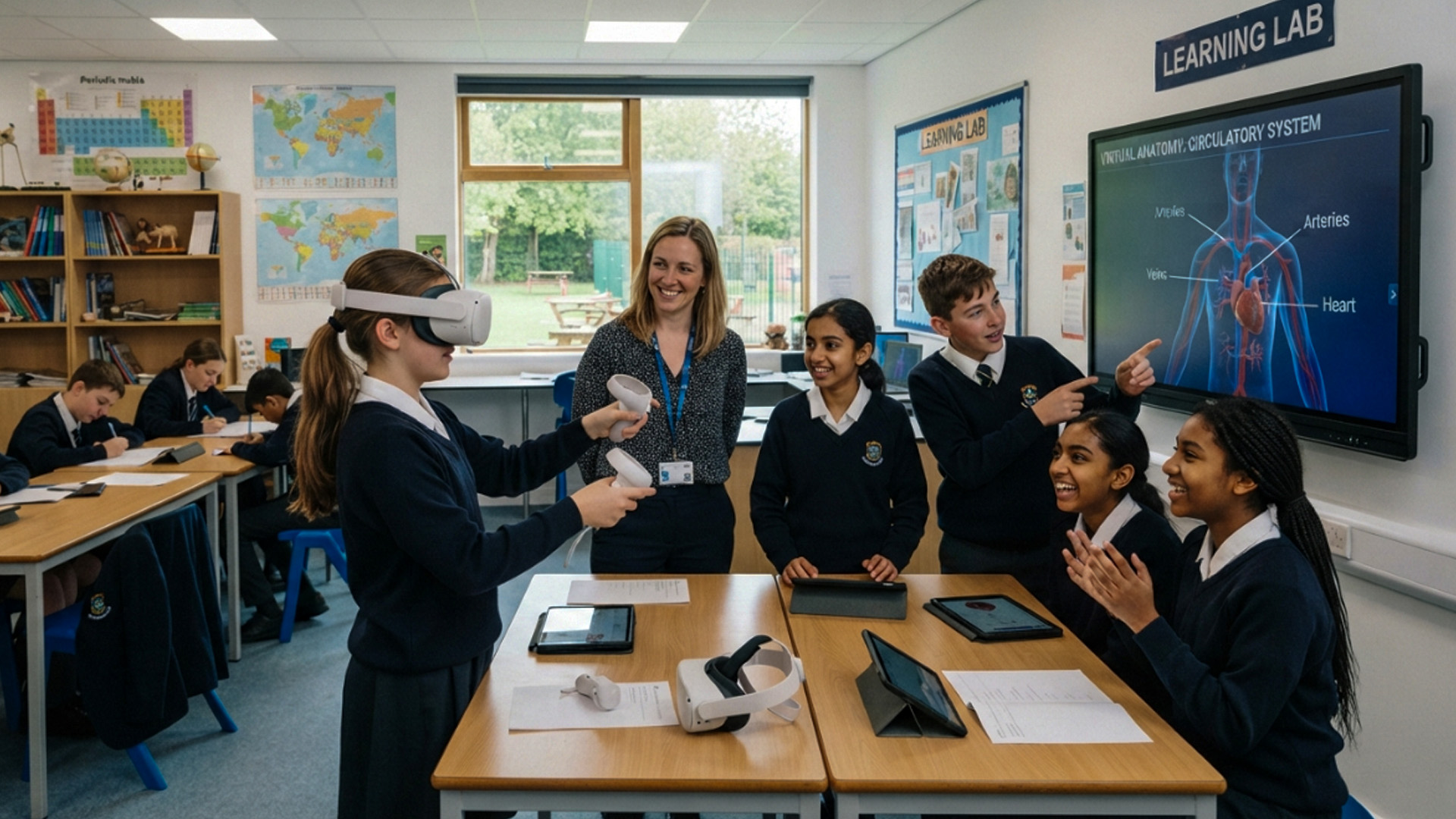
Many schools and training providers will begin with a small number of headsets rather than one device for every learner. This can still work well if the lesson is structured carefully. One group can use the headsets while another group completes a related worksheet, watches the mirrored screen or prepares questions for a discussion.
Rotating learners through short activities can make the experience more manageable. It also encourages collaboration because students can discuss what they saw and help each other connect the VR activity to the wider lesson.
Teachers do not need to become technical specialists to use VR effectively. They need reliable equipment, clear content and a simple process for introducing, supervising and finishing the activity.
Privacy and Responsible Technology Use
As VR systems become more connected, schools and training providers need to think carefully about privacy. Some experiences may collect information about learner progress, interaction choices or performance. This data can be useful for feedback, but it should be collected responsibly and explained clearly.
Learners and parents should understand what information is being used and why. Institutions should choose platforms that support appropriate data protection and avoid collecting more information than is necessary for the learning activity.
Responsible use also includes choosing content carefully. VR experiences should be age-appropriate, aligned with learning goals and designed to avoid unnecessary distractions. Technology should support education, not compete with it.
What Educators Should Look for in a VR Learning Experience
The best VR learning content is not always the most complex. A simple experience with a clear purpose can be more effective than a visually impressive world that does not connect to the curriculum. Educators should look for content that supports a specific topic, gives learners meaningful interaction and includes a clear point for reflection afterwards.
It is useful to ask whether the activity gives learners something they could not easily get from a video, textbook or normal classroom demonstration. If the answer is yes, VR may add real value. If the activity only repeats information that is already easy to explain in another format, it may not be the best use of time or resources.
Good VR learning experiences also need to be practical. They should be easy to launch, simple for learners to understand and manageable for teachers to supervise. The technology should not create more work than the learning benefit justifies.
Building VR Into a Wider Learning Plan
Virtual reality works best when it is one part of a wider learning plan. A teacher can introduce the topic before the activity, guide learners during the experience and use discussion or assessment afterwards to reinforce the lesson.
This approach helps learners move from observation to understanding. They are not only seeing a virtual environment; they are thinking about what it means, how it connects to the subject and how they can apply that knowledge elsewhere.
In 2026, the most useful VR education projects are likely to be those that focus on this balance. They use immersive technology where it genuinely improves understanding, while keeping teachers, learning outcomes and learner comfort at the centre of the experience.
Author: Elisha Roodt
Sharing practical insights on immersive learning, XR hardware, curriculum-aligned simulations, and what’s next for education in the Metaverse.