
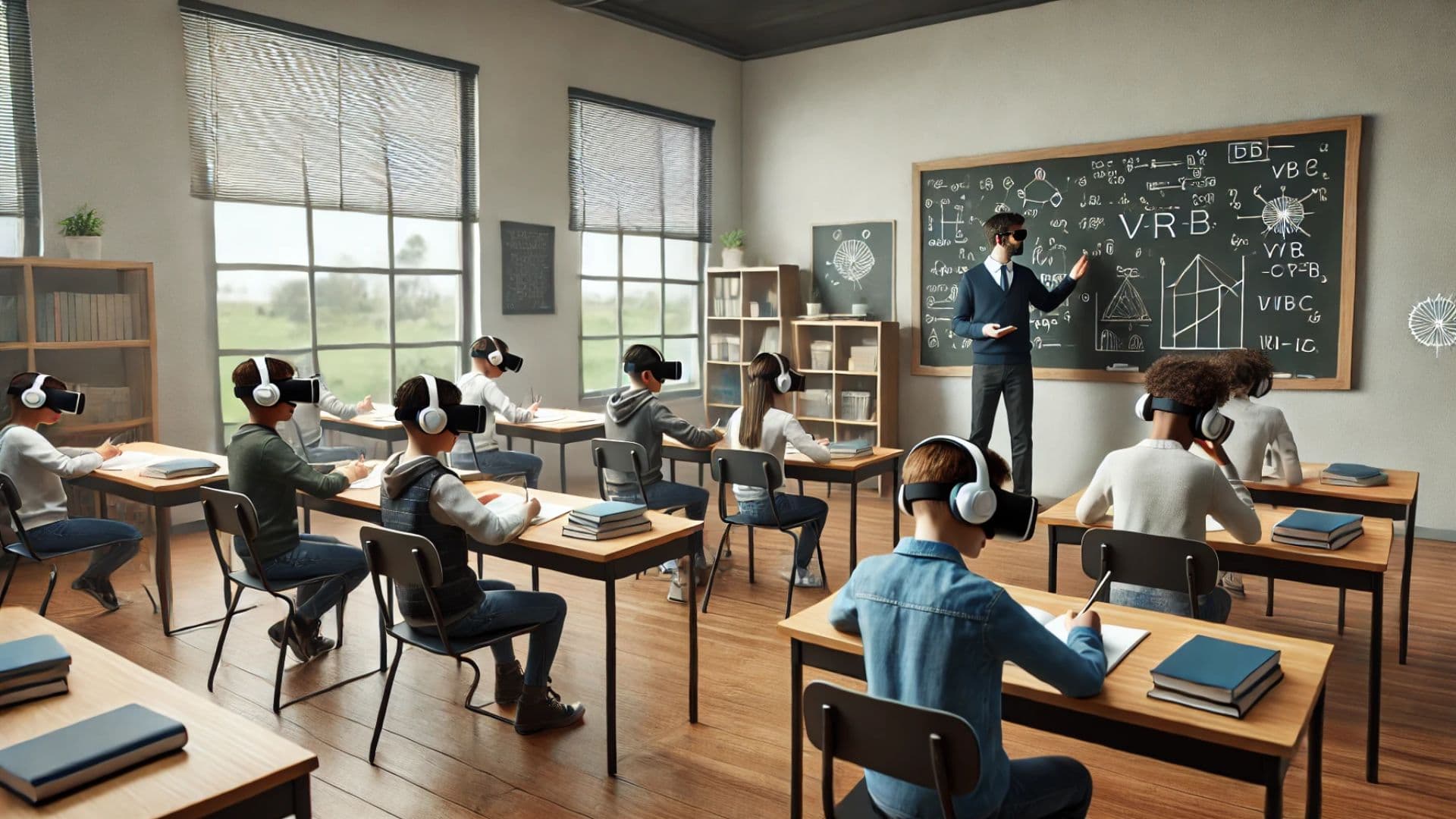
Virtual Reality in Education: Benefits, Uses & Examples
The dawn of Virtual Reality (VR) in education marks a pivotal shift in the way knowledge is imparted and absorbed. No longer are students confined...
The dawn of Virtual Reality (VR) in education marks a pivotal shift in the way knowledge is imparted and absorbed. No longer are students confined to the static pages of textbooks or the rigid walls of a classroom. With VR, learning becomes an immersive experience, breaking the barriers between theoretical knowledge and practical application. The convergence of technology and education through VR is not just a fleeting trend; it is a revolution that promises to redefine the educational landscape, offering unprecedented opportunities for engagement, interaction, and understanding.
Defining Virtual Reality in Education
Understanding Virtual Reality (VR)
Virtual Reality, in its essence, is the creation of a simulated environment that can be explored and interacted with by an individual. Unlike traditional user interfaces, VR places the user inside an experience, allowing them to immerse themselves in a three-dimensional world that can replicate real-world scenarios or present entirely new ones. In the educational context, VR serves as a bridge between abstract concepts and tangible experiences, enabling students to visualize and engage with the material in ways that were previously unimaginable.
How VR is Integrated into Educational Systems
The integration of VR into educational systems is a multifaceted process that involves both technological and pedagogical considerations. Schools and universities are adopting VR by creating dedicated virtual learning environments where students can participate in interactive simulations, virtual labs, and immersive field trips. This integration requires a seamless blend of hardware, such as VR headsets and controllers, and software that provides the educational content. Teachers play a crucial role in this process, as they must adapt their teaching strategies to effectively incorporate VR into their lessons, ensuring that the technology enhances rather than distracts from the learning experience.
The Evolution of VR Technology in the Classroom
The journey of VR technology from a nascent concept to a mainstream educational tool has been marked by rapid advancements. Early VR systems were bulky, expensive, and limited in functionality, making them inaccessible to most educational institutions. However, recent developments in VR technology have led to more affordable, portable, and user-friendly devices, such as standalone VR headsets that do not require a powerful computer to operate. Additionally, the content available for VR education has expanded significantly, with a growing number of educational platforms offering specialized VR experiences across a wide range of subjects. This evolution has made VR a viable option for classrooms around the world, transforming it from a novelty into an essential educational resource.

Benefits of Virtual Reality in Education
Enhanced Student Engagement and Motivation
One of the most significant benefits of VR in education is its ability to captivate students' attention and foster a deeper level of engagement. Traditional teaching methods often struggle to maintain students' interest, particularly in subjects that are perceived as dry or difficult. VR, however, offers a dynamic and interactive learning experience that can make even the most challenging topics intriguing. By immersing students in a virtual world where they can explore and interact with the content, VR stimulates curiosity and motivates learners to take an active role in their education. This heightened engagement leads to better retention of information and a more positive attitude towards learning.
Immersive Learning Environments for Better Retention
The immersive nature of VR creates a learning environment where students can fully concentrate on the subject matter without the distractions commonly found in traditional classrooms. When students are placed in a virtual environment that mimics real-world scenarios or visualizes complex concepts, they are more likely to remember the information because they have experienced it firsthand. Studies have shown that experiential learning, where students learn by doing, significantly improves retention rates. VR provides a platform for this type of learning, allowing students to experiment, make decisions, and observe the outcomes in a safe and controlled environment.
Personalized Learning Experiences Tailored to Individual Needs
Every student has a unique learning style, and one of the challenges of traditional education is catering to these diverse needs within a single classroom. VR offers a solution by enabling personalized learning experiences that can be tailored to individual students. In a VR environment, students can progress at their own pace, revisit concepts they find difficult, and explore areas of interest in greater depth. This personalization not only helps students to master the material but also builds their confidence and autonomy as learners. Moreover, teachers can use VR data analytics to track student progress and provide targeted support where needed.
Breaking Down Geographical Barriers with Virtual Field Trips
Field trips have long been a staple of education, offering students the opportunity to learn outside the classroom and experience new environments. However, logistical and financial constraints often limit the scope and frequency of these trips. VR eliminates these barriers by enabling virtual field trips to locations that would otherwise be inaccessible. Whether exploring the ancient ruins of Rome, diving into the Great Barrier Reef, or walking on the surface of Mars, VR allows students to embark on educational adventures without leaving the classroom. These virtual experiences broaden students' horizons and provide a global perspective that is invaluable in today's interconnected world.
Developing Practical Skills Through Simulated Experiences
Practical skills are often best learned through hands-on experience, but providing such opportunities can be challenging in an educational setting. VR addresses this challenge by offering simulated environments where students can practice and refine their skills without the risk of real-world consequences. For example, medical students can perform virtual surgeries, engineering students can build and test structures, and pilots can fly virtual planes. These simulations provide a safe space for experimentation and learning, allowing students to gain confidence and competence before applying their skills in real-world situations.
Fostering Collaboration and Communication in Virtual Spaces
Collaboration and communication are essential skills in both education and the workplace, and VR offers innovative ways to develop these abilities. In a virtual environment, students can work together on group projects, participate in discussions, and solve problems collaboratively, even if they are physically located in different parts of the world. VR fosters a sense of presence and teamwork that is often difficult to achieve in traditional online learning platforms. By interacting with their peers in a shared virtual space, students learn to communicate effectively, delegate tasks, and work as part of a team, preparing them for the collaborative nature of the modern workplace.

Key Uses of Virtual Reality in Education
Virtual Reality for Science and Engineering Education
Science and engineering are fields that greatly benefit from the application of VR technology. In these disciplines, understanding complex concepts often requires visualizing processes that are either too small, too large, or too dangerous to observe directly. VR provides a solution by allowing students to explore molecular structures, manipulate chemical reactions, and observe the behavior of engineering systems in a controlled, virtual environment. For instance, students can enter a virtual lab to conduct experiments, test hypotheses, and see the immediate results of their actions, all without the need for physical materials or the risk of accidents. This hands-on, immersive approach enhances comprehension and fosters a deeper understanding of scientific principles.
History Lessons Reimagined Through Time-Travel Simulations
History education is often criticized for being too abstract, relying heavily on memorization of dates, events, and figures. VR has the potential to revolutionize history lessons by allowing students to step back in time and witness historical events as if they were there. Time-travel simulations can transport students to ancient civilizations, pivotal battles, and significant moments in history, providing a vivid, first-person perspective that textbooks simply cannot offer. By immersing themselves in these historical settings, students gain a more profound understanding of the context and significance of past events, making history come alive in ways that foster a lasting interest and appreciation for the subject.
Language Learning Through Immersive Cultural Experiences
Language learning is another area where VR excels, offering immersive environments that simulate real-life interactions in the target language. Traditional language classes often struggle to provide students with authentic conversational practice, particularly in cultural contexts that are essential for fluency. VR bridges this gap by allowing students to engage in conversations with virtual characters, navigate foreign cities, and participate in cultural activities, all while receiving real-time feedback on their language skills. These immersive experiences help students to build confidence in their language abilities, improve their pronunciation, and develop a deeper understanding of the cultural nuances that are crucial for effective communication.
Medical Training with VR Surgery Simulations
The field of medicine demands precision, skill, and a deep understanding of human anatomy, all of which can be enhanced through VR. Medical training often involves observing surgeries or practicing on cadavers, but these opportunities are limited and come with ethical and logistical challenges. VR surgery simulations offer an alternative, allowing medical students to perform virtual procedures in a realistic, yet risk-free environment. These simulations can replicate a wide range of medical scenarios, from routine surgeries to rare and complex cases, providing students with the experience they need to develop their surgical skills and decision-making abilities. As a result, VR is helping to produce more competent and confident healthcare professionals.
Arts and Design Education in Virtual Studios
In the creative fields of art and design, VR opens up new possibilities for experimentation and expression. Traditional art education often involves physical materials and spaces that can limit what students can create. VR, however, offers virtual studios where students can paint, sculpt, design, and build without the constraints of the physical world. These virtual environments allow for limitless creativity, enabling students to explore new techniques, materials, and concepts in a way that is both immersive and interactive. Additionally, VR can simulate real-world design challenges, such as architectural planning or product design, providing students with valuable hands-on experience that prepares them for careers in the creative industries.
Special Education: Tailored VR Experiences for Diverse Needs
Special education presents unique challenges, as students often require individualized instruction and support. VR offers a powerful tool for meeting these needs by providing tailored learning experiences that can be customized to each student's abilities and learning style. For example, VR can create calming environments for students with sensory processing issues, provide visual and auditory cues for students with learning disabilities, and offer interactive, engaging lessons for students with attention difficulties. These personalized VR experiences help to create an inclusive learning environment where all students have the opportunity to succeed, regardless of their individual challenges.

Examples of Virtual Reality Applications in Education
K-12 Education: How Schools are Implementing VR
Across the globe, K-12 schools are beginning to integrate VR into their curriculums, recognizing its potential to enhance learning and engage students. From virtual field trips to interactive science labs, VR is being used to supplement traditional teaching methods and provide students with experiences that were previously out of reach. Schools are experimenting with VR in a variety of subjects, including history, geography, science, and literature, offering students new ways to interact with the material and develop a deeper understanding of the content. These early implementations of VR in K-12 education are paving the way for more widespread adoption, as schools continue to explore the possibilities of this transformative technology.
Higher Education: Universities Leading the VR Charge
Universities and colleges are at the forefront of VR adoption, using the technology to enhance both teaching and research. In higher education, VR is being used to create virtual classrooms, conduct remote lectures, and offer immersive simulations that prepare students for real-world challenges. For example, medical schools are using VR to train future surgeons, while engineering programs are using it to simulate complex systems and processes. Additionally, universities are conducting research into the educational potential of VR, exploring how it can be used to improve learning outcomes and create more engaging and effective teaching methods. As leaders in the field of education, universities are driving the development and implementation of VR, setting the stage for its future growth.
Corporate Training Programs Using VR for Skill Development
Beyond traditional education, VR is also being used in corporate training programs to help employees develop new skills and improve their performance. Companies are using VR to create realistic simulations of work environments, allowing employees to practice tasks, learn new procedures, and develop their problem-solving abilities in a safe and controlled setting. This approach is particularly valuable in industries where mistakes can be costly or dangerous, such as manufacturing, healthcare, and aviation. By providing employees with hands-on training in a virtual environment, companies can improve the effectiveness of their training programs and ensure that their workforce is well-prepared for the demands of their jobs.
Global Initiatives and Case Studies of VR in Education
Around the world, various initiatives and projects are exploring the potential of VR in education, with promising results. For example, organizations are using VR to provide educational opportunities in underserved communities, where access to quality education is limited. In these cases, VR is helping to bridge the gap, offering students in remote or disadvantaged areas the chance to experience the same high-quality education as their peers in more developed regions. Additionally, case studies from schools and universities around the world are demonstrating the positive impact of VR on student engagement, motivation, and learning outcomes, providing valuable insights into how the technology can be effectively implemented in different educational contexts.
Success Stories: Students and Teachers Benefiting from VR
The success of VR in education is best illustrated through the stories of students and teachers who have benefited from the technology. Students who have struggled with traditional learning methods are finding new ways to engage with the material through VR, discovering a renewed interest in subjects they once found difficult or boring. Teachers, too, are seeing the advantages of VR, as it allows them to present complex concepts in a way that is both accessible and engaging. These success stories highlight the transformative potential of VR in education, showing how it can make learning more effective, enjoyable, and inclusive for all students.

Challenges and Considerations in Adopting VR in Education
Technical and Financial Barriers to Implementation
While the benefits of VR in education are clear, there are also significant challenges that must be addressed in order to make the technology accessible to all schools and students. One of the primary barriers is the cost of VR equipment and software, which can be prohibitively expensive for many educational institutions. Additionally, the technical requirements for running VR systems, such as powerful computers and high-speed internet connections, may not be available in all schools, particularly in rural or underserved areas. These financial and technical challenges must be overcome in order to ensure that all students have the opportunity to benefit from VR in their education.
Addressing Health and Safety Concerns in VR Use
The use of VR in education also raises important health and safety concerns that must be carefully considered. Prolonged use of VR headsets can cause eye strain, motion sickness, and other physical discomforts, particularly for young students. Additionally, there are concerns about the psychological impact of immersive VR experiences, particularly in terms of how they may affect students' perceptions of reality and their ability to distinguish between virtual and real-world experiences. Educators and researchers must work together to develop guidelines and best practices for the safe and responsible use of VR in education, ensuring that the technology is used in a way that benefits students without causing harm.
Teacher Training and Curriculum Development for VR
Another challenge in adopting VR in education is the need for teacher training and curriculum development. While VR offers exciting new possibilities for teaching and learning, it also requires a new set of skills and approaches from educators. Teachers must learn how to effectively incorporate VR into their lessons, designing activities and assessments that take full advantage of the technology's capabilities. Additionally, curriculum developers must create new materials and resources that are specifically designed for use in VR environments. This requires a significant investment of time and resources, as well as ongoing support and professional development for teachers.
Ensuring Accessibility and Inclusivity in VR Education
As with any educational technology, it is essential to ensure that VR is accessible and inclusive for all students, regardless of their background, abilities, or learning needs. This includes making VR equipment and content available to students with disabilities, such as those who are visually or hearing impaired. Additionally, it is important to consider the needs of students from diverse cultural and socioeconomic backgrounds, ensuring that VR content is relevant and meaningful to all learners. By prioritizing accessibility and inclusivity, educators can ensure that VR becomes a tool for empowering all students, rather than exacerbating existing inequalities in education.

Future of Virtual Reality in Education
Predictions and Trends for VR in the Classroom
As VR technology continues to evolve, its impact on education is likely to grow in both scope and significance. In the coming years, we can expect to see VR become more widely adopted in classrooms around the world, as schools and universities recognize its potential to enhance learning and engage students. Emerging trends in VR education include the development of more sophisticated simulations, the integration of artificial intelligence and machine learning, and the creation of collaborative virtual learning environments. These innovations will further expand the possibilities for VR in education, making it an increasingly important tool for teachers and students alike.
Potential Technological Advances in Educational VR
The future of VR in education will be shaped by ongoing technological advances, many of which are already on the horizon. For example, the development of more realistic and responsive VR environments, powered by advances in graphics, haptics, and artificial intelligence, will enable even more immersive and interactive learning experiences. Additionally, improvements in VR hardware, such as lighter and more comfortable headsets, will make the technology more accessible and user-friendly for students and teachers. These technological advancements will continue to push the boundaries of what is possible in VR education, opening up new opportunities for learning and discovery.
The Role of Artificial Intelligence in Enhancing VR Learning
Artificial intelligence (AI) is set to play a crucial role in the future of VR education, offering new ways to personalize and enhance the learning experience. AI can be used to create adaptive learning environments that respond to individual students' needs, providing real-time feedback, guidance, and support. For example, AI-powered virtual tutors can assist students in navigating VR simulations, offering explanations, hints, and corrections as needed. Additionally, AI can be used to analyze data from VR interactions, helping teachers to identify areas where students may be struggling and providing insights into how to improve their learning outcomes. The combination of VR and AI represents a powerful new frontier in education, with the potential to transform the way we teach and learn.
Long-Term Impact of VR on Traditional Education Models
The widespread adoption of VR in education is likely to have a profound impact on traditional education models, challenging the status quo and prompting a reevaluation of how we approach teaching and learning. As VR becomes more integrated into the classroom, we may see a shift away from passive, lecture-based instruction towards more active, experiential learning. This shift has the potential to democratize education, making it more accessible and equitable for students around the world. However, it also raises important questions about the role of teachers, the structure of the curriculum, and the future of educational institutions. As we move forward, it will be essential to carefully consider the long-term implications of VR in education and to ensure that its adoption is guided by a commitment to quality, equity, and student success.
Recapping the Impact of VR on Modern Education
The introduction of VR into education marks a significant milestone in the ongoing evolution of teaching and learning. By providing immersive, interactive, and personalized learning experiences, VR has the potential to transform education in ways that were previously unimaginable. From enhancing student engagement and retention to breaking down geographical barriers and fostering collaboration, VR offers a powerful tool for educators who are committed to improving learning outcomes for all students.
Encouraging Educators to Explore VR Opportunities
As the benefits of VR in education become increasingly clear, it is essential for educators to explore the opportunities that this technology offers. While the adoption of VR may require an investment of time, resources, and training, the rewards are well worth the effort. By embracing VR, educators can create more dynamic and effective learning environments that engage students, support their individual needs, and prepare them for success in a rapidly changing world.
Final Thoughts on the Future of Virtual Reality in Education
The future of VR in education is bright, with endless possibilities for innovation and improvement. As technology continues to advance, and as educators and researchers gain a deeper understanding of how to effectively use VR in the classroom, we can expect to see even more exciting developments in this field. Ultimately, the success of VR in education will depend on our willingness to embrace change, experiment with new approaches, and prioritize the needs and interests of students. By doing so, we can harness the power of VR to create a more engaging, inclusive, and effective educational experience for all learners.

Future of Virtual Reality in Education
Author: Elisha Roodt
Sharing practical insights on immersive learning, XR hardware, curriculum-aligned simulations, and what’s next for education in the Metaverse.